Sfera Bloch
Terdapat cara geometri yang berguna untuk mewakili keadaan qubit yang dikenali sebagai sfera Bloch. Ia sangat mudah, tetapi malangnya ia hanya berfungsi untuk qubit — perwakilan yang serupa tidak lagi sepadan dengan objek sfera apabila kita mempunyai tiga atau lebih keadaan klasikal dalam sistem kita.
Keadaan qubit sebagai titik pada sfera
Mari kita mulakan dengan memikirkan vektor keadaan kuantum bagi sebuah qubit: Kita boleh mengehadkan perhatian kepada vektor di mana adalah nombor nyata tak negatif kerana setiap vektor keadaan qubit adalah setara sehingga fasa global kepada satu di mana Ini membolehkan kita menulis
untuk dua nombor nyata dan . Di sini, kita membenarkan dari ke dan membahagi dengan dalam argumen sinus dan kosinus kerana ini adalah cara konvensional untuk memparameterkan vektor jenis ini, dan ia akan memudahkan sesuatu kemudian.
Sekarang, tidaklah tepat bahawa nombor dan ditentukan secara unik oleh vektor keadaan kuantum tertentu , tetapi hampir begitu. Khususnya, jika , maka dan tidak ada perbezaan nilai apa pun yang diambil oleh , jadi ia boleh dipilih secara sewenang-wenangnya. Begitu juga, jika , maka , dan sekali lagi tidak relevan (kerana keadaan kita setara dengan untuk sebarang sehingga fasa global). Namun, jika mahupun tidak sifar, maka terdapat pilihan unik untuk pasangan di mana adalah setara dengan sehingga fasa global.
Seterusnya, mari kita pertimbangkan perwakilan matriks ketumpatan bagi keadaan ini.
Kita boleh menggunakan beberapa identiti trigonometri,
serta formula , untuk memudahkan matriks ketumpatan seperti berikut.
Ini memudahkan kita menyatakan matriks ketumpatan ini sebagai gabungan linear matriks Pauli:
Secara khusus, kita simpulkan bahawa
Pekali dan dalam pengangka ungkapan ini semuanya adalah nombor nyata, jadi kita boleh mengumpulkan mereka bersama untuk membentuk vektor dalam ruang Euclidean tiga dimensi biasa.
Malah, ini adalah vektor unit. Menggunakan koordinat sfera ia boleh ditulis sebagai Koordinat pertama, mewakili jejari atau jarak jejarian (yang sentiasa dalam kes ini), mewakili sudut kutub, dan mewakili sudut azimut.
Dalam kata-kata, bayangkan sfera sebagai planet Bumi, sudut kutub adalah seberapa jauh kita berputar ke selatan dari kutub utara untuk mencapai titik yang digambarkan, dari ke , manakala sudut azimut adalah seberapa jauh kita berputar ke timur dari meridian perdana, dari ke . Ini mengandaikan bahawa kita menakrifkan meridian perdana sebagai lengkung pada permukaan sfera dari satu kutub ke kutub lain yang melalui paksi positif.
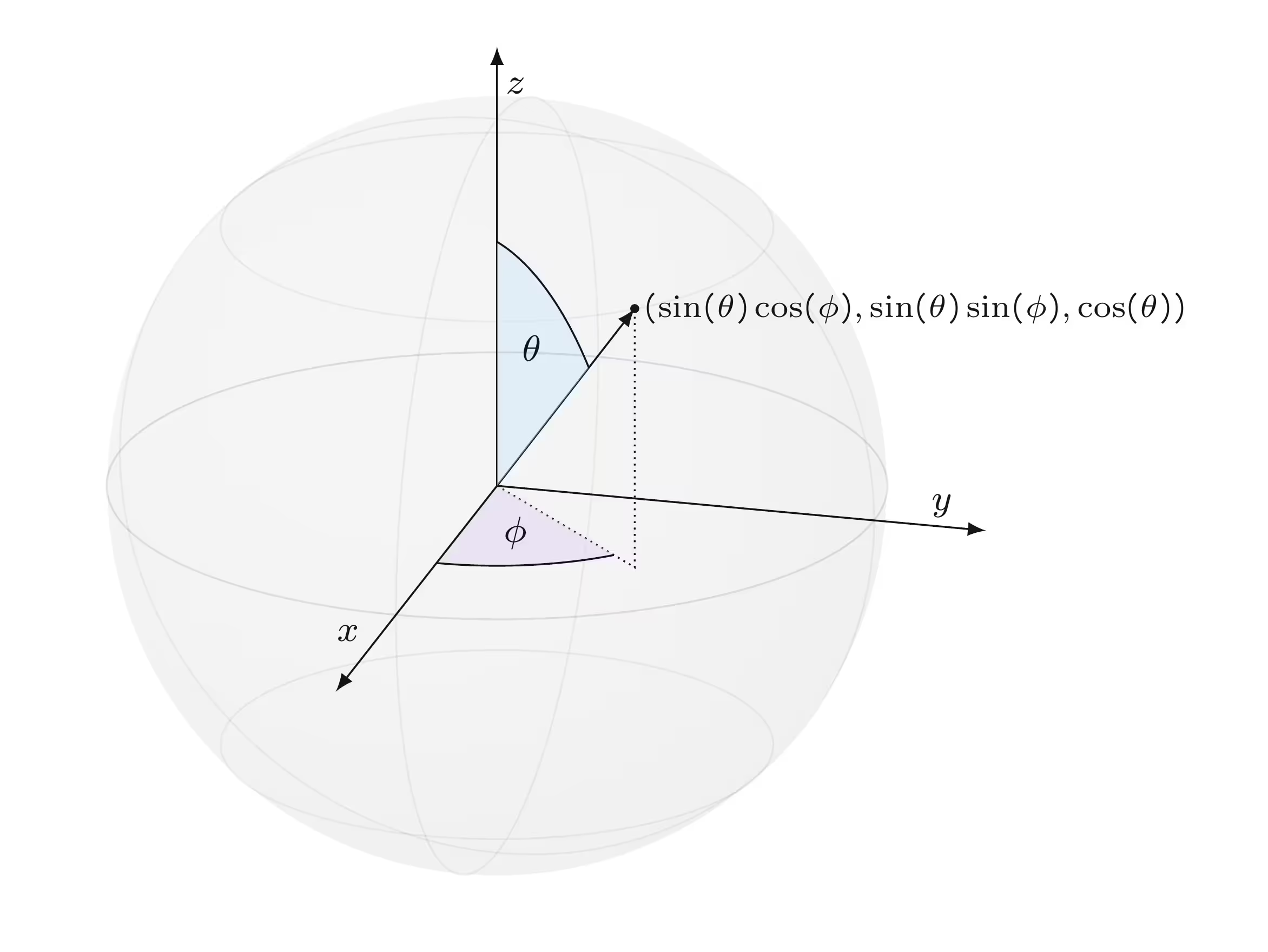
Setiap titik pada sfera boleh diterangkan dengan cara ini — iaitu, titik-titik yang kita perolehi apabila kita merentasi semua keadaan tulen yang mungkin bagi qubit berpadanan tepat dengan sfera dalam dimensi nyata. (Sfera ini biasanya dipanggil unit -sfera kerana permukaan sfera ini adalah dua dimensi.)
Apabila kita menghubungkan titik pada unit -sfera dengan keadaan tulen qubit, kita memperoleh perwakilan sfera Bloch bagi keadaan-keadaan ini.
Enam contoh penting
-
Asas piawai . Mari kita mulakan dengan keadaan . Sebagai matriks ketumpatan ia boleh ditulis seperti ini.
Dengan mengumpulkan pekali matriks Pauli dalam pengangka, kita melihat bahawa titik berpadanan pada unit -sfera menggunakan koordinat Cartesian adalah . Dalam koordinat sfera titik ini adalah , di mana boleh menjadi sebarang sudut. Ini konsisten dengan ungkapan
yang juga berfungsi untuk sebarang . Secara intuitif, sudut kutub adalah sifar, jadi kita berada di kutub utara sfera Bloch, di mana sudut azimut tidak relevan.
Sepanjang garis yang sama, matriks ketumpatan untuk keadaan boleh ditulis seperti ini.
Kali ini koordinat Cartesian adalah . Dalam koordinat sfera titik ini adalah di mana boleh menjadi sebarang sudut. Dalam kes ini sudut kutub sampai ke , jadi kita berada di kutub selatan di mana sudut azimut sekali lagi tidak relevan.
-
Asas . Kita mempunyai ungkapan-ungkapan ini untuk matriks ketumpatan yang berpadanan dengan keadaan-keadaan ini.
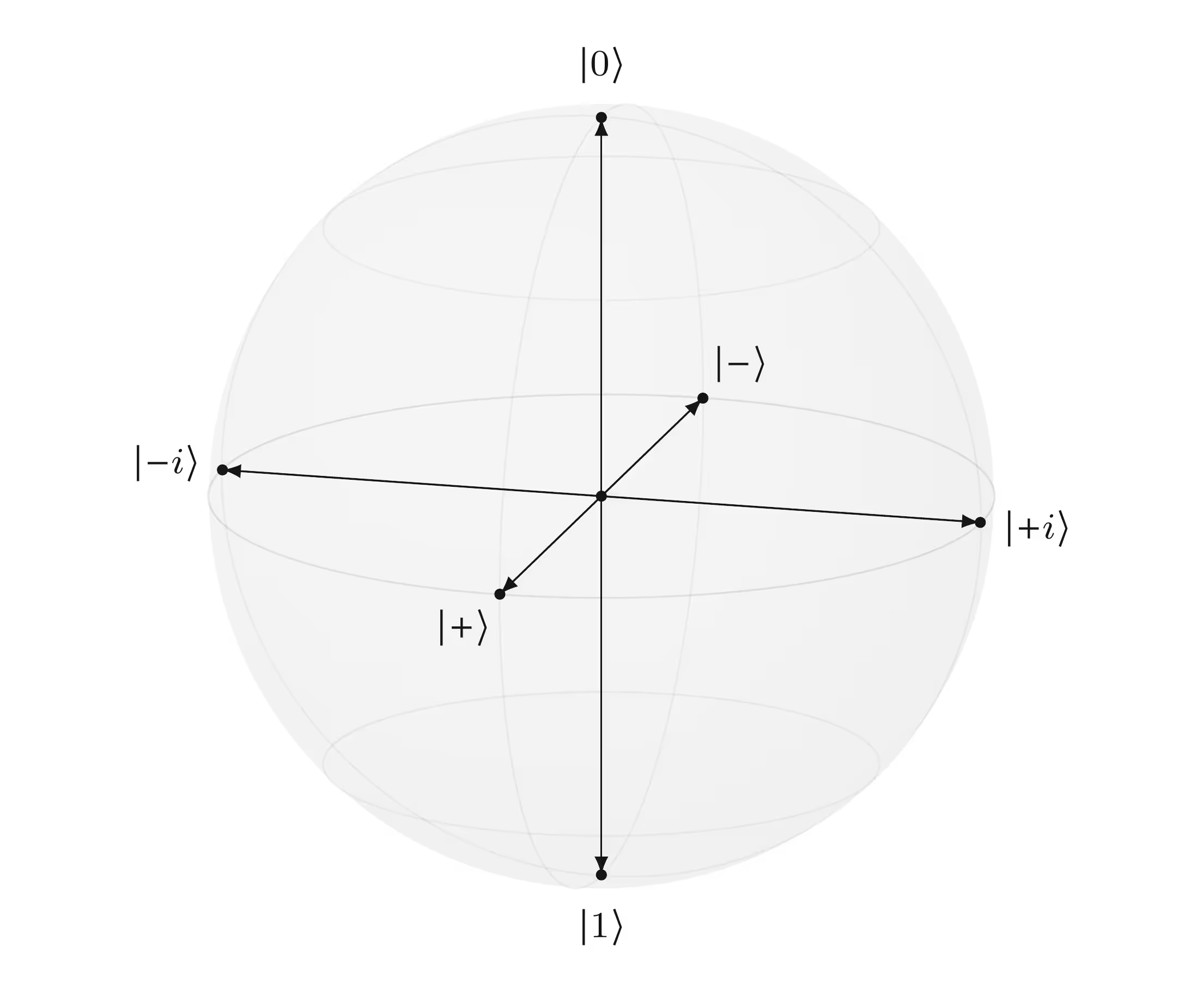
Titik-titik berpadanan pada unit -sfera mempunyai koordinat Cartesian dan , dan koordinat sfera dan , masing-masing.
Dalam kata-kata, berpadanan dengan titik di mana paksi positif bersilang dengan unit -sfera dan berpadanan dengan titik di mana paksi negatif bersilang dengannya. Secara lebih intuitif, berada di khatulistiwa sfera Bloch di tempat ia bertemu meridian perdana, dan berada di khatulistiwa pada sisi berlawanan sfera.
-
Asas . Seperti yang kita lihat sebelum ini dalam pelajaran, kedua-dua keadaan ini ditakrifkan seperti ini:
Kali ini kita mempunyai ungkapan-ungkapan ini.
Titik-titik berpadanan pada unit -sfera mempunyai koordinat Cartesian dan , dan koordinat sfera dan , masing-masing.
Dalam kata-kata, berpadanan dengan titik di mana paksi positif bersilang dengan unit -sfera dan dengan titik di mana paksi negatif bersilang dengannya.
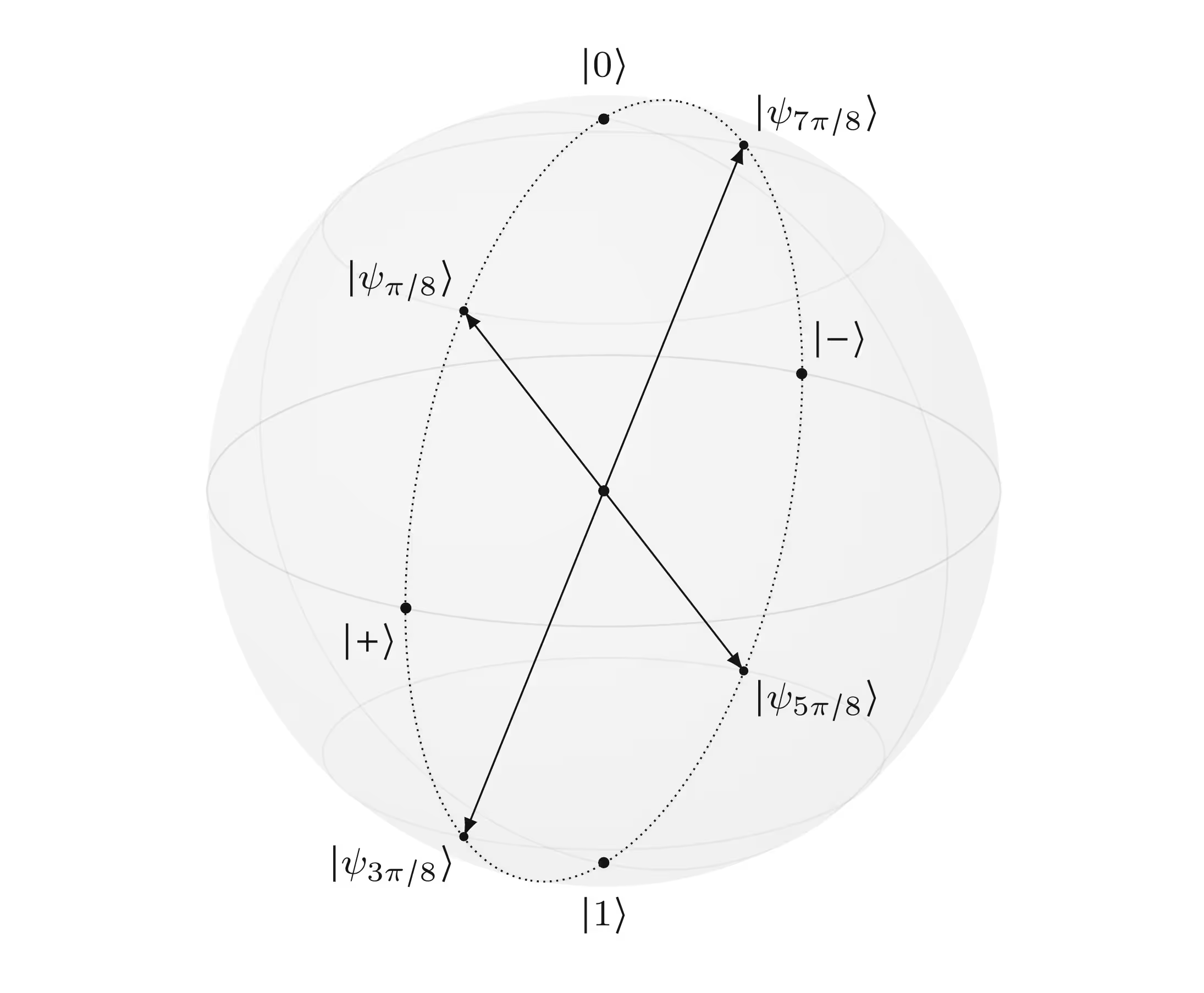
Berikut adalah kelas lain vektor keadaan kuantum yang telah muncul dari semasa ke semasa sepanjang siri ini, termasuk sebelum ini dalam pelajaran ini.
Perwakilan matriks ketumpatan bagi setiap keadaan ini adalah seperti berikut.
Rajah berikut menggambarkan titik-titik berpadanan pada sfera Bloch untuk beberapa pilihan .
Gabungan cembung titik-titik
Serupa dengan apa yang telah kita bincangkan untuk matriks ketumpatan, kita boleh mengambil gabungan cembung titik-titik pada sfera Bloch untuk mendapatkan perwakilan matriks ketumpatan qubit. Secara umum, ini menghasilkan titik-titik di dalam sfera Bloch, yang mewakili matriks ketumpatan keadaan yang bukan tulen. Kadangkala kita merujuk kepada bola Bloch apabila kita ingin menerangkan secara eksplisit tentang kemasukan titik-titik di dalam sfera Bloch sebagai perwakilan matriks ketumpatan qubit.
Sebagai contoh, kita telah melihat bahawa matriks ketumpatan , yang mewakili keadaan bercampur sepenuhnya bagi qubit, boleh ditulis dalam dua cara alternatif ini:
Kita juga mempunyai
dan secara lebih umum kita boleh menggunakan mana-mana dua vektor keadaan qubit ortogon (yang sentiasa berpadanan dengan dua titik antipodal pada sfera Bloch). Jika kita merata-ratakan titik-titik berpadanan pada sfera Bloch dengan cara yang serupa, kita memperoleh titik yang sama, yang dalam kes ini berada di pusat sfera. Ini konsisten dengan pemerhatian bahawa
memberi kita koordinat Cartesian .
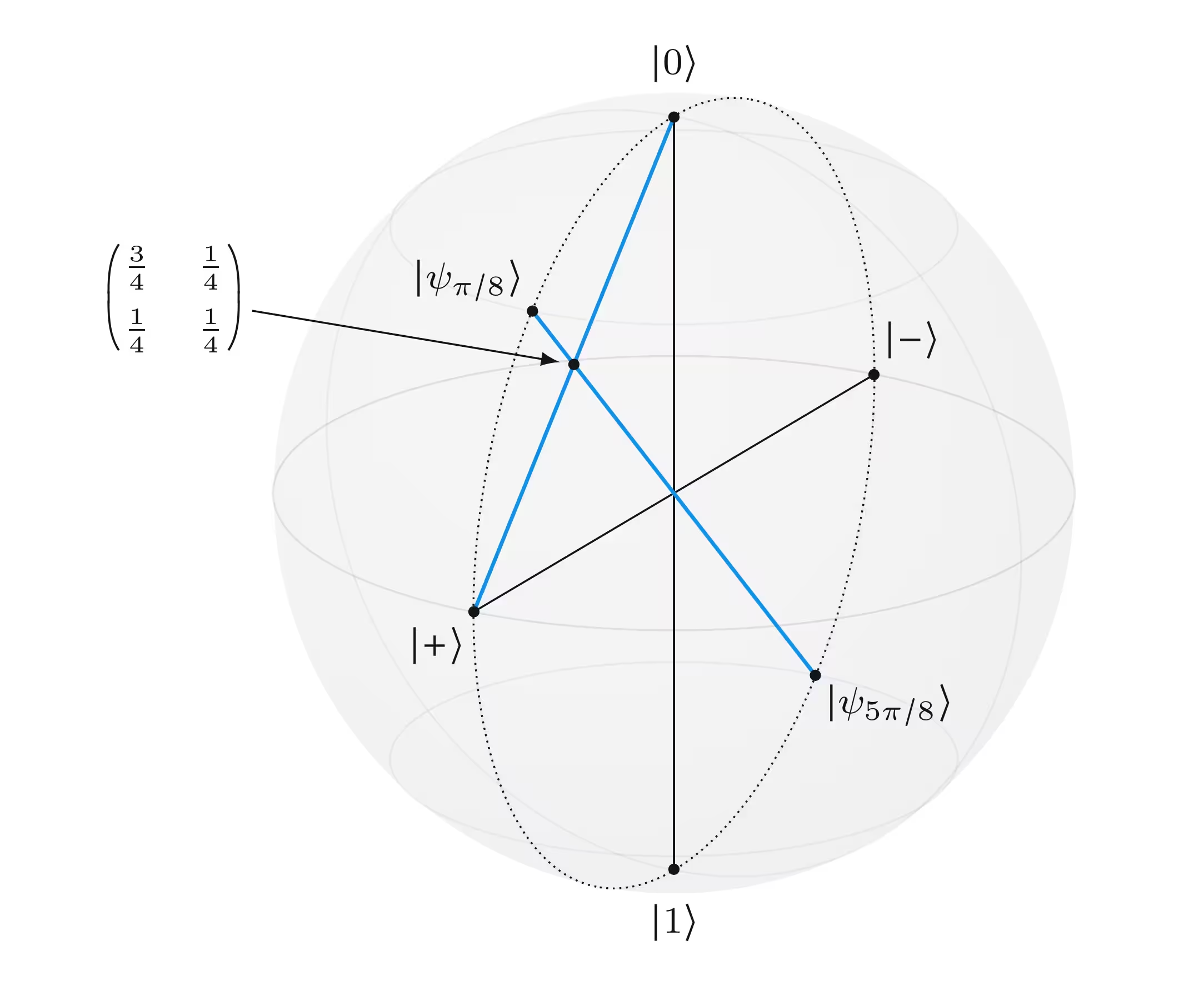
Contoh berbeza mengenai gabungan cembung titik-titik sfera Bloch adalah yang dibincangkan dalam subseksyen sebelumnya.
Rajah berikut menggambarkan dua cara berbeza untuk mendapatkan matriks ketumpatan ini sebagai gabungan cembung keadaan-keadaan tulen.